Council vs Private Bulky Waste Clearance 2026
What council bulky waste collection covers, typical fees and how far ahead you must book Where council pickups fall short: item limits, wait times and no duty-of-care paperwork When a private clearance is worth it - fixed pricing, same-week slots and an EA-licensed carrier
By Binshare Team
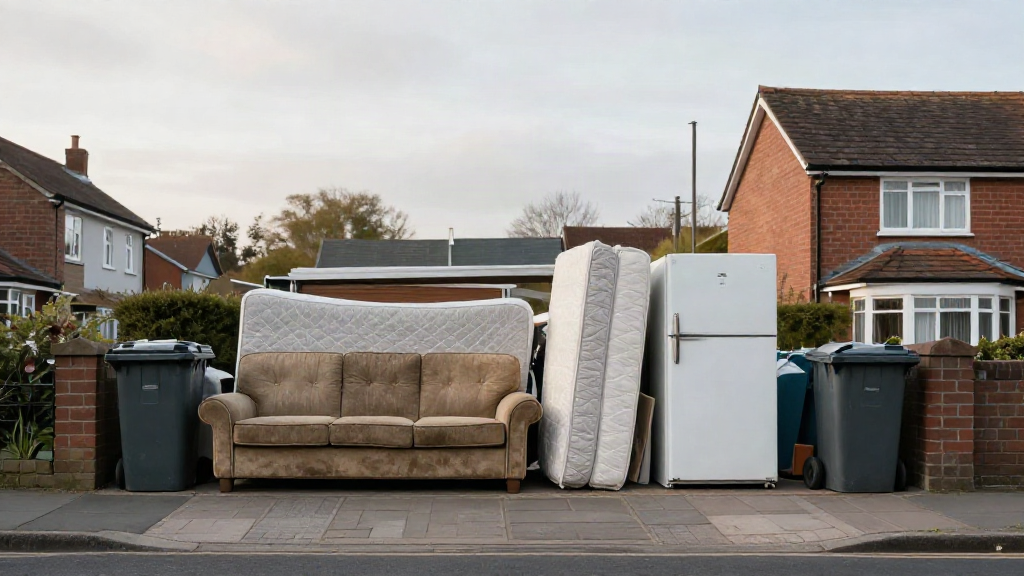
Council bulky waste collection is the cheapest way to clear a sofa, a fridge or a mattress in many parts of the UK. A private, licensed clearance is the fastest. Here is the honest comparison for 2026. What council bulky waste collection covers Every council runs a bulky waste service, but the rules are local. A typical booking takes items that will not fit in a wheelie bin: sofas, wardrobes, beds and mattresses, fridges and freezers, washing machines and ovens, and some electricals such as TVs. Most councils cap a booking at three to six items, so a bigger pile means a second booking, a second fee and a second wait. How much it costs Fees vary widely by council and normally rise each April. Some authorities still allow a small number of free collections per household each year; many now charge per item or per booking, with extra for collection from inside the property. Charges are usually per item, so a house clearance adds up quickly, and a missed or rejected collection often means paying again. How far ahead you have to book Council slots are tied to collection rounds and are usually quoted in weeks rather than days. In busy periods the wait stretches further. If items are blocking a hallway, a driveway or a house sale, that delay is the real cost. What councils will not take Building and DIY waste such as plasterboard, tiles and timber is out, as are soil, rubble and hardcore, any trade or business waste, and hazardous items. Leave those out anyway and you risk a fly-tipping penalty. The duty-of-care question Under the Environmental Protection Act 1990, whoever produces the waste has a legal duty of care to make sure it is disposed of correctly. A council collection covers this for you. A private clearance only covers it when the carrier is registered with the Environment Agency and hands you a waste transfer note showing who took what, when and where it went. Binshare works only with EA-licensed carriers, issues a duty-of-care receipt on every job and backs it with a £500 Flytipping Guarantee. When a private clearance is worth it A paid clearance earns its fee when you need it gone this week, when you have more items than a council booking allows, when the job is a full house, garden or office clearance, when the items are not on the council list, when they sit inside the property or upstairs, or when you need compliant paperwork as a landlord, business or seller. Council pickups vs a private clearance, side by side On price, a council booking is often lower per item, while a private clearance gives one fixed quote for the whole job. On speed, council slots run weeks, while a licensed carrier is often available the same week. On volume, a council booking is capped at a handful of items, while a clearance takes an entire house, garden or office in one visit. On effort, the council expects items at the kerbside, while a private carrier collects from inside a property or an upstairs flat. On paperwork, only a licensed private carrier hands you a duty-of-care receipt. How Binshare makes it quick Snap a photo of what needs to go, and verified EA-licensed carriers nearby send fixed quotes. Pick one, book a slot and receive your duty-of-care receipt when the job is done. Three steps, about ninety seconds. The verdict One or two standard items and no deadline: a council bulky waste collection is fine. A pile, a deadline, a property to clear or a duty of care to evidence: a licensed private clearance is faster, clearer and safer, and with fixed quotes often cheaper than you expect.