
House Clearance Jobs: A Carrier Case Study | Binshare
The problem: quiet weeks, chasing quotes and slow payment for independent carriers How one carrier used Binshare to win local house clearance jobs and cut admin The results - fuller vans, faster payouts and how to sign up as a carrier
By Binshare Team
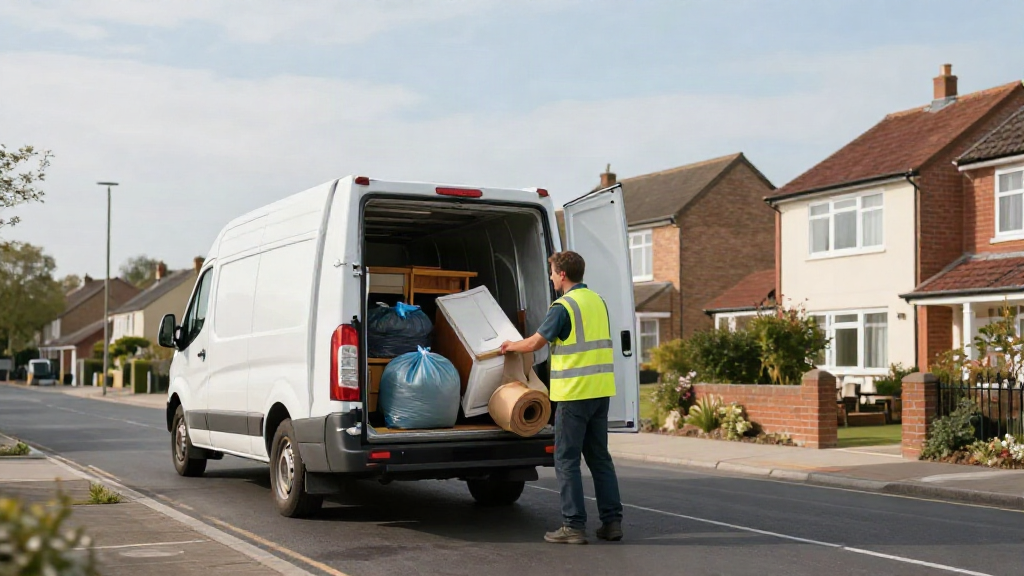
If you drive a van for a living, you already know the shape of a bad week. Two jobs booked, three quotes sent, one customer gone quiet. Monday disappears into admin instead of collections, and you spend the rest of it driving the same streets wondering who else needs a clearance done this week. That is the problem Binshare exists to solve, and why independent carriers are the other half of our marketplace. Here is how one carrier turned a quiet diary into a steady flow of local house clearance jobs - and what it takes to do the same. The example below illustrates how carriers use Binshare day to day rather than a single audited account, but the mechanics are exactly the same for everyone on the marketplace. ## The problem: quiet weeks, chased payments and an empty van Carriers come to Binshare from the same place. They are good at the work - loading, clearing, getting a property emptied fast - but the pipeline in front of the work is fragile. The pattern looks like this: - Feast or famine. A week of three jobs, then a week of nothing, because the next enquiry depends on someone happening to see your van or your Facebook post. - Quotes that go nowhere. You drive out to price a house clearance, write it up, send it, then chase it. Half of them never reply. - Slow money. Even the jobs you win can sit unpaid for weeks, long after the tip run and the labour costs have been paid out of your own pocket. - Admin that eats the day. Chasing quotes, confirming dates, sorting waste transfer paperwork and trying to keep a duty-of-care trail - all of it before you have earned a penny. Add it up and the van is half empty more often than it is full, and the quiet weeks are the ones that hurt. ## How one carrier filled the diary with local house clearance jobs The shift is less about working harder and more about where the jobs come from. Instead of waiting for local enquiries to find him, the carrier in this example started pulling clearance work from one place. Here is the flow. ### 1. Sign up and get verified as a carrier Carriers join the marketplace, confirm their business details and waste carrier credentials, and set the areas they cover. That verification is not a hurdle - it is the reason customers trust the quote they get. Binshare only works with EA-licensed carriers, so a verified profile carries weight before you have even spoken to a customer. ### 2. Quote jobs from your phone Customers who need items reused, removed or a property cleared post a job with a photo. Carriers see the local jobs that match their area and van, and send a fixed quote from the app. No site visit for every enquiry, no written estimate, no waiting for a callback. Three steps, about ninety seconds - and you are in front of a customer who is actively looking, not browsing. ### 3. Turn up, clear the job and close it out On the day, you do what you are good at: clear the property, load the van and get it to the right place. Because the quote is fixed and agreed up front, there is no renegotiation on the doorstep. When the job is done, the customer gets a compliant duty-of-care receipt, and your evidence trail writes itself. ## The results: a fuller van, less admin and faster payouts The difference shows up in three places. The van stays fuller. Instead of relying on one channel and hoping, the carrier was quoting local clearance jobs as they came up - house clearances, single bulky items, garden and office clearances - and stacking them through the week. Same streets, more loads. Admin drops away. The quoting, the job details, the schedule and the paperwork all sit in one place. There is no spreadsheet of promises and no folder of unfiled transfer notes. The hours that used to go into chasing quotes go back into driving and loading. Payment stops being the worry. Carriers get paid through the marketplace, quickly and without a trail of invoices to chase. That matters most on a small operation, where cash flow is the difference between taking on the next job and turning it down. For a customer, the same marketplace means a fixed, transparent price, a trusted carrier and a duty-of-care receipt at the end. For a carrier, it means the jobs come to you, the paperwork is handled, and the money follows the work. ## What independent carriers should take from this The lesson is not that one carrier got lucky. It is that the supply side of waste clearance is a grind for exactly the reasons the marketplace exists to fix: unpredictable enquiries, unpaid invoices and paperwork that never ends. Put the demand in one place, make quoting fast, make payment reliable and make compliance automatic, and the van fills up. That is the whole point of Binshare - and it works both ways. Customers get a fast, trusted, guaranteed clearance with a paper trail. Carriers get more local jobs, less admin and quicker payouts, backed by a £500 Flytipping Guarantee that tells customers you are the safe choice. ## Ready to sign up as a carrier If you run an independent waste or clearance business and you want a steadier flow of local house clearance jobs, the next step is straightforward. Sign up as a carrier, get verified, set your coverage area and start quoting jobs from your phone. Reuse. Remove. Clear. - and keep the van full doing it.