
How to Register as a Waste Carrier in the UK (Beginner Guide)
Who needs a waste carrier registration and which tier applies to you How to register with the Environment Agency step by step, and what it costs How to stay compliant, prove registration to customers and win more local jobs
By Binshare Team
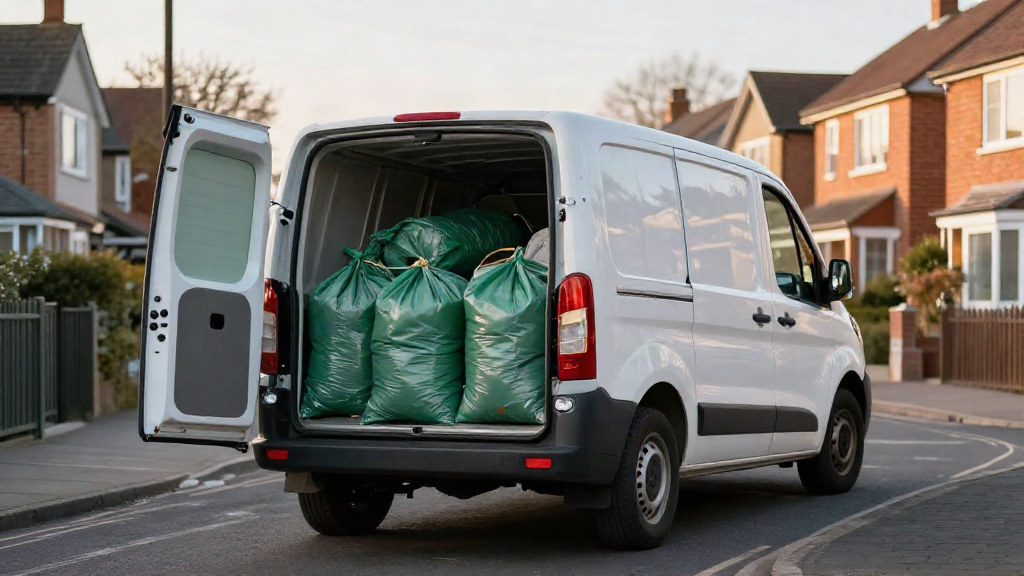
If you are starting a clearance or waste removal business in the UK, there is one piece of admin you cannot skip: registering as a waste carrier. Get it right and you can legally take on jobs, quote with confidence and win the trust of customers who care where their rubbish ends up. Get it wrong and you risk fines, seized vehicles and a reputation you cannot rebuild. This beginner's guide walks you through who needs to register, which tier applies to you, and exactly how to register as a waste carrier with the Environment Agency.
Who needs to register as a waste carrier?
You need to register if you transport, buy, sell, broker or dispose of other people's waste as part of your business. That covers far more than dedicated waste firms. It includes house and garden clearance teams, man-and-van operators shifting a customer's old furniture, office clearance crews, builders removing construction waste, scrap collectors and anyone who brokers a job on to someone else. In short: if waste that you did not produce passes through your hands for a fee, you almost certainly need a registration.
Registration is handled by the environmental regulator for your nation. In England it is the Environment Agency, in Wales it is Natural Resources Wales, in Scotland it is SEPA, and in Northern Ireland it is NIEA. The rules are broadly similar, so use the regulator for the part of the UK where you operate.
Lower tier or upper tier? Which one applies to you
There are two levels of waste carrier registration, and getting the right one is where most newcomers trip up. The tier you need depends on the type of waste you carry and whether it belongs to you or someone else.
The lower tier
The lower tier is for businesses that only deal with limited kinds of waste. It normally applies if you carry your own waste - for example, a builder removing rubble from a site you are working on - or if you are a charity or social enterprise collecting certain donated items. Lower tier registration is free and stays valid for as long as your details do not change.
The upper tier
The upper tier applies to professional waste carriers, brokers and dealers. If you collect waste that you did not produce - which is the case for nearly every clearance and man-and-van business - you are in the upper tier. You also fall into this tier if you carry construction or demolition waste for others, or if you buy, sell or arrange the movement of waste. Upper tier registration carries a fee and must be renewed, typically every three years.
A quick rule of thumb for new clearance businesses: if customers are paying you to take their rubbish away, assume you are upper tier until your regulator tells you otherwise.
How to register with the Environment Agency, step by step
Registering is straightforward and can be done online in a single sitting. Here is the process for England.
Step 1 - Confirm your tier. Work out whether you are lower or upper tier using the guidance above, so you apply for the right registration first time.
Step 2 - Gather your details. Have your business name, address, company or partnership details, contact information and vehicle information to hand. You will also need to confirm how you handle waste.
Step 3 - Apply online via GOV.UK. Complete the waste carrier, broker or dealer registration form on the government website. It asks a short set of questions about your business and the waste you handle.
Step 4 - Pay any fee. Lower tier registration is free. Upper tier carries a fee, which you pay as part of the application. Always check the current fee on GOV.UK, as rates are reviewed periodically.
Step 5 - Keep your certificate. Once approved, you receive a registration certificate and a registration number. Store the certificate safely and display it in your vehicle - customers and enforcement officers may ask to see it.
Step 6 - Renew on time. Upper tier registrations expire after around three years. Diarise your renewal date so you are never working without a valid registration.
What does waste carrier registration cost?
Lower tier registration costs nothing. Upper tier registration carries a modest fee, paid at application and again at each renewal. Vehicle and carrier registrations are priced per business rather than per job, so for a working clearance operation the cost is small against the value of being able to trade legally. Check the live figures on GOV.UK before you apply, and factor the renewal fee into your annual running costs.
Staying compliant after you register
Registration is the starting line, not the finish line. Waste carrier rules sit alongside your duty of care, the legal obligation to make sure waste is stored, transported and disposed of safely and legally. In practice that means a few habits you build into every job.
Complete a waste transfer note or duty-of-care receipt for every collection, recording what the waste is, where it came from and where it is going.
Only hand waste to a permitted or licensed site, and keep evidence of where each load ended up.
Keep your vehicle and paperwork tidy and consistent with what you told the regulator.
Tell your regulator promptly if your business details, vehicles or the waste you handle change.
Do all of that and you can prove, on paper, that every load you carry was handled properly - which is exactly what protects you if a customer's waste is ever questioned.
How to prove your registration to customers
Your registration is a selling point, not just a legal box to tick. Householders and businesses are increasingly aware of fly-tipping and the risk of using an unlicensed collector, because in law the waste can remain their responsibility. Make your compliance visible: show your registration number on quotes and invoices, share your certificate when asked, and issue a duty-of-care receipt on every job. That paperwork is what separates a trusted carrier from a bloke with a van.
Turn compliance into more local jobs
Being registered and compliant opens the door to better-paid, more reliable work - but only if customers can find you. That is where Binshare comes in. Binshare is a UK waste marketplace that connects verified, EA-licensed carriers with households, landlords and businesses who need items reused, removed or cleared. Snap a photo of the job, get fixed quotes, and the customer gets a compliant duty-of-care receipt - all in about ninety seconds.
Because Binshare only works with licensed carriers, your registration does more than keep you legal: it is your entry ticket to a steady stream of local jobs. You fill your van, cut the admin of chasing quotes, and get paid quickly. Plus, every job is backed by trust signals customers actually recognise, including the Binshare £500 Flytipping Guarantee.
The bottom line
Registering as a waste carrier is one of the simplest things you will do to set up a clearance business, and one of the most important. Confirm your tier, apply through your regulator, keep your certificate and paperwork in order, and prove your compliance at every step. Do that, and you are not just keeping the law happy - you are building the kind of trusted, professional reputation that wins repeat business and bigger jobs. Then let Binshare put that van to work.