
Probate House Clearance UK: A Step-by-Step Guide
What probate house clearance involves and who is responsible for it How to sort, reuse and safely dispose of belongings room by room How to book an EA-licensed carrier and keep your duty-of-care paperwork
By Binshare Team
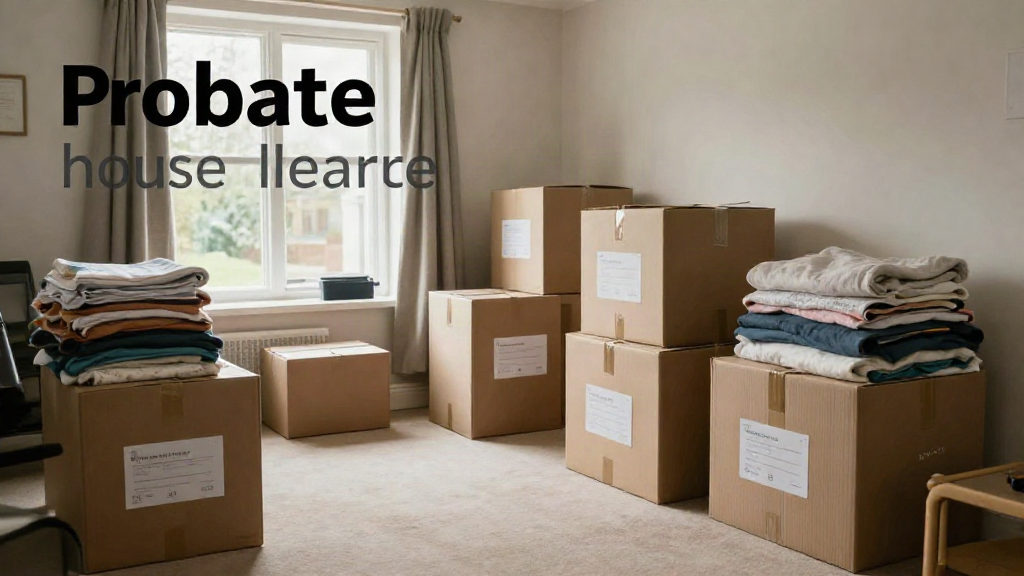
Clearing a house after a bereavement is one of the hardest jobs you will ever have to organise. You are grieving, you are dealing with paperwork, and suddenly you are standing in a full house deciding what stays, what goes and who takes it away. A probate house clearance does not have to be something you figure out alone. Get the order of steps right, and the whole thing becomes manageable: sort first, reuse what you can, then book a licensed carrier who handles the disposal and proves where everything went.
This guide walks you through it in plain steps - what probate clearance involves, who is responsible, how to work through the home room by room, and how to book a carrier you can trust without overpaying.
What probate house clearance actually involves
A probate house clearance is the process of emptying a property that belonged to someone who has died, so it can be sold, rented or handed back. It covers everything from sorting personal belongings and clearing furniture to removing general waste and bulky items - and disposing of all of it legally.
It is not the same as probate itself. Probate is the legal authority to deal with the estate. The clearance is the physical work that usually happens once that authority is in place, or shortly before the property is transferred or sold.
There are two jobs hiding inside one. The first is deciding what happens to the belongings - keepsakes, valuables, documents, things that can be reused or donated. The second is getting rid of everything left, which is where waste rules and duty-of-care paperwork come in.
Who is responsible for clearing a house after a bereavement?
If you are the executor, the administrator or the next of kin, the responsibility is usually yours. The estate pays for the clearance, and as the person handling it you are accountable for making sure items are disposed of legally and correctly.
That last part matters more than most people realise. In the UK, anyone who produces waste - and that includes you as the person clearing the house - has a legal duty of care to make sure it is only handed to a licensed carrier and that it ends up at an authorised site. If it is fly-tipped instead, the trail can lead back to you.
You do not have to do the labour yourself, and you should not feel obliged to. Your responsibility is to choose a compliant route and keep the paperwork. A verified, EA-licensed carrier takes the physical work off your hands and gives you a receipt that proves you did the right thing.
How to clear a home room by room
Trying to tackle a whole house at once is how people burn out. Work in a fixed order, one room at a time, and give yourself permission to move slowly through the emotional parts.
Start with paperwork and valuables
Before anything leaves the house, collect the documents and the things that carry real value. Birth and marriage certificates, wills, deeds, bank and pension letters, insurance policies, share certificates, jewellery, watches and any cash. Put these somewhere secure and out of the clearance's way. This single step prevents the most common and most painful mistake.
Sort every room into four piles
In each room, sort belongings into four groups: keep, donate or sell, recycle, and dispose. Be decisive but not ruthless - if something is genuinely hard to part with, keep it and decide later. Do not try to value everything yourself; if there is a lot of furniture, art or collectibles, that is a job for an appraiser, not a clearance morning.
Reuse and donate what you can
Many belongings still have life in them. Clothing, working furniture, books, kitchenware, tools and children's items can go to charity shops, furniture reuse schemes or local community groups. Reuse is not just kinder - it cuts the volume left for disposal, which is often the biggest line in a clearance quote. Make a list of what you are donating and note where it went.
Dispose of the rest legally
Everything left over - broken furniture, mattresses, garden waste, general rubbish - needs to go through a licensed route. This is the pile a professional carrier handles, and it is the pile that carries the legal risk if it is handled badly. Do not hand it to a random van from a social media post, however cheap the offer looks.
How to book an EA-licensed carrier
For most families, booking a licensed clearance company is the point where the stress drops. Here is how to do it well.
Check the licence and the paperwork
Ask for a Waste Carrier Licence - in England, an EA-licensed carrier registered with the Environment Agency. A legitimate operator will show it without hesitation. You are looking for the licence number, the company details, and a written agreement to provide a duty-of-care receipt once the waste is disposed of.
Get fixed quotes, not estimates
Vague hourly pricing is where clearance bills spiral. You want a fixed quote based on what is actually in the property. On Binshare you snap a photo of what needs to go, and verified carriers send fixed quotes back - usually within about ninety seconds. You compare them side by side and choose on price and reviews, not guesswork.
Keep the duty-of-care receipt
Once the job is done, insist on your duty-of-care receipt. It records what was collected, when, and where it was taken. Keep it with the estate paperwork. If anyone ever questions how the contents of the house were disposed of, that receipt is your proof - and it is the difference between a closed file and an open problem.
What affects the price of a probate clearance
Costs vary with volume and access, not just the address. A few things move the number: how much there is to remove, whether items are bulky or heavy, whether the property is upstairs or has narrow access, parking and permit restrictions, and how much can be reused rather than landfilled. Reuse-friendly clearances cost less because there is less waste to tip.
Getting quotes early, and being honest about volume in your photos, is the simplest way to avoid surprises on the day.
A simple checklist
Secure documents and valuables first. Sort each room into keep, donate, recycle and dispose. Donate and reuse what you can to cut volume. Book only an EA-licensed carrier and get fixed quotes. Keep your duty-of-care receipt with the estate papers. Then let the property rest, and let yourself rest too.
You have enough to carry without carrying this alone. Binshare connects you with verified, EA-licensed carriers who clear probate homes quickly, quote fixed prices up front and leave you with the paperwork you need. Snap a photo, compare your quotes, and get the house cleared the right way - in three steps and about ninety seconds.