What Can You Not Put in a Skip? 10 Banned Items
Why skips have prohibited items and what happens if you get it wrong The 10 most common items you can't put in a skip (and the reason each is banned) The legal way to dispose of each one, from WEEE and plasterboard to tyres and paint
By Binshare Team
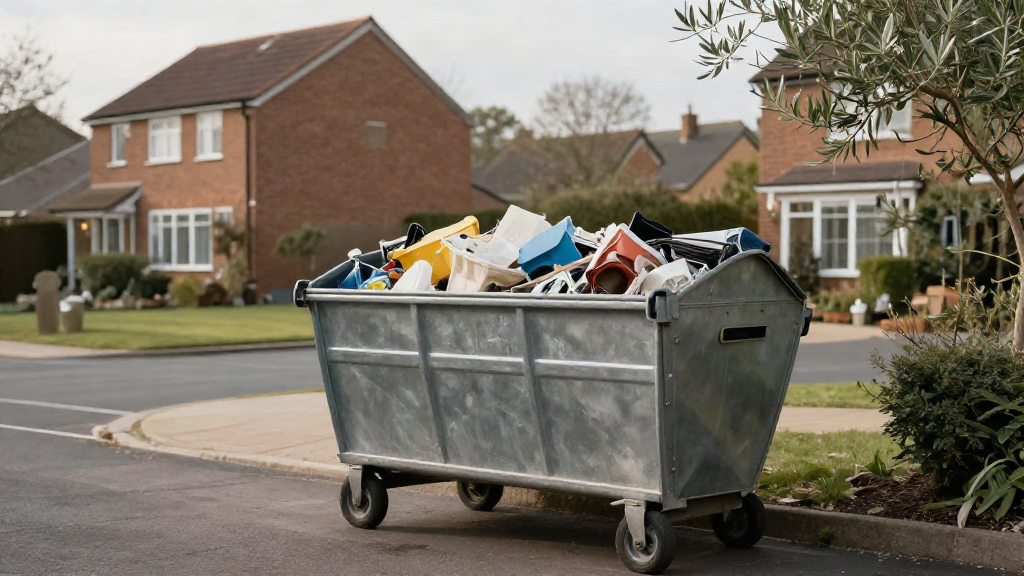
Hiring a skip feels simple until you start filling it. Most people assume anything that fits through the sides is fair game. It isn't. Every skip company in the UK refuses certain items, and if you load one by accident you can face a refused collection, a surcharge, or in the worst case a fine that lands on you, not the carrier.
This guide covers the ten items you can't put in a skip, the reason each one is banned, and the legal route to dispose of it. If you would rather skip the guesswork altogether, Binshare connects you with EA-licensed carriers who quote, collect and clear it for you - snap a photo, get fixed quotes, and receive a duty-of-care receipt, all in about ninety seconds.
Why skips have prohibited items - and what happens if you get it wrong
Skips are licensed for general, non-hazardous waste. Anything hazardous, polluting, or controlled by separate regulations has to travel through a different, permitted route. That's a legal requirement under UK waste rules, not a company being difficult.
If a banned item is found in your skip, the load can be rejected or quarantined. You may be charged to have the whole skip re-sorted, and the carrier can refuse to tip it. Because your duty of care doesn't end when the skip leaves your drive, the responsibility for what goes in it stays with you.
Here are the ten most common offenders.
1. Plasterboard and gypsum
Plasterboard is banned from mixed skips because gypsum reacts with biodegradable waste to produce hydrogen sulphide, a toxic gas. Even a small offcut can contaminate an entire load.
The legal route: keep plasterboard separate and book a dedicated plasterboard skip or a licensed collection. Binshare carriers take it as a standalone job, so it never mixes with general waste.
2. Asbestos
Asbestos is classed as hazardous waste and is never allowed in a standard skip, in any quantity, in any condition. Disturbing it releases fibres that cause serious lung disease.
The legal route: asbestos must be handled by a licensed hazardous-waste contractor, often after a survey. Never bag it yourself and never hide it under other waste.
3. Fridges, freezers and other electrical items
Fridges, freezers, washing machines, TVs and anything with a plug or battery count as WEEE. They contain refrigerant gases and hazardous components, so they can't go in a general skip.
The legal route: book a WEEE-specific removal or use your council's electrical recycling point. Binshare carrier jobs are itemised, so appliances are logged and disposed of through permitted channels.
4. Tyres
Tyres are banned from skips and landfill. They're bulky, fire-prone, and expensive to process, which is exactly why illegal tyre dumping is such a problem.
The legal route: take them to a garage, a registered tyre recycler, or book a licensed collection. You should always be able to name where your tyres ended up.
5. Paint, solvents and varnish
Wet paint, thinners, varnish and solvents are hazardous. Even part-used tins leak, contaminate the load and can make the whole skip unrecyclable.
The legal route: use a council household waste site that accepts chemicals, or a licensed hazardous collection. Leave paint to dry fully in the tin before disposing of the empty metal, where your local site allows it.
6. Batteries, including lithium-ion
Batteries cause some of the most damaging fires in waste trucks and recycling plants. Lithium batteries in particular can ignite when crushed.
The legal route: take batteries to a shop collection point or a dedicated battery bin. Never drop them into a skip, and never into general rubbish.
7. Gas cylinders and aerosol canisters
Pressurised containers like gas bottles, camping canisters and aerosols can explode when compacted. No skip operator will take them.
The legal route: return refillable cylinders to the supplier and take aerosols to a site that accepts hazardous household waste.
8. Fluorescent tubes and energy-saving bulbs
Fluorescent tubes and most low-energy bulbs contain mercury. They're hazardous when broken and must be handled separately.
The legal route: use your council's hazardous waste facility or a licensed commercial collection.
9. Food waste and liquid waste
Food scraps attract vermin, create odour and speed up decomposition, while liquids simply leak straight out of the skip.
The legal route: food waste goes in your council food caddy or a licensed commercial food-waste service. Liquids must never enter a skip.
10. Clinical and medical waste
Dressings, sharps, medical equipment and contaminated materials are controlled waste and require a specialist, permitted route.
The legal route: use a licensed clinical-waste contractor or your GP's or pharmacy's take-back scheme.
The safe way to get rid of anything a skip won't take
Reading through that list, the pattern is clear: the awkward items are exactly the ones that carry the most legal and safety risk. The easiest way to stay on the right side of the rules is to hand the job to licensed professionals who dispose of each item through the correct route - and put it in writing.
That's what Binshare is built for. You photograph what needs to go, verified EA-licensed carriers send fixed quotes, and you book the one that suits you. You're covered by the £500 Flytipping Guarantee, and every job ends with a duty-of-care receipt, so you always have proof of where your waste went.
No mixed loads, no hidden prohibitions, no fines landing on your doorstep. Three steps, about ninety seconds, and it's gone - legally.
Reuse. Remove. Clear.