
What Is Duty of Care Waste? UK Rules Explained
Duty of care explained for UK households and businesses: what you are legally responsible for, why the £500 Flytipping Guarantee matters, and how to keep your waste paperwork safe.
By Binshare Team
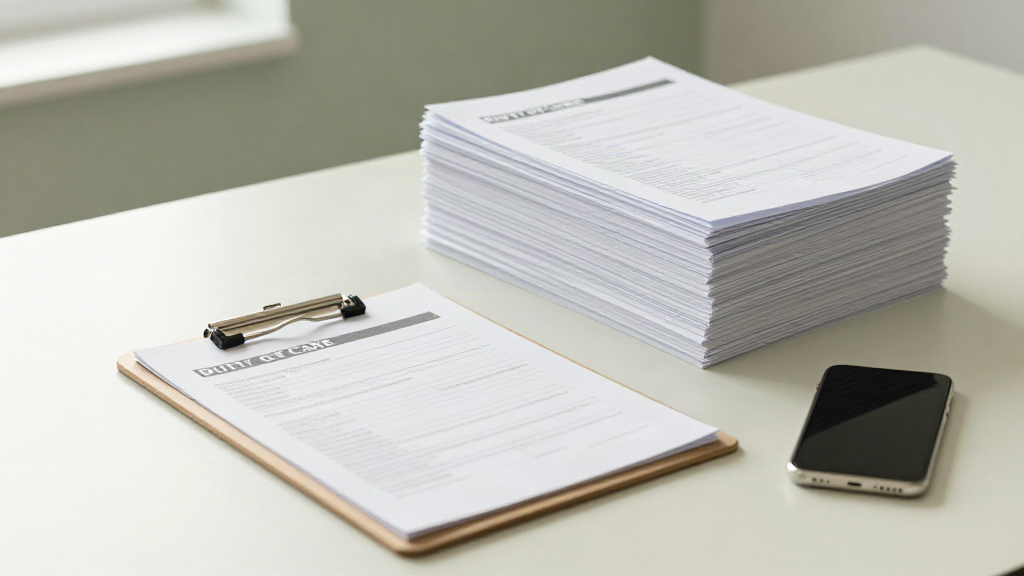
What is duty of care waste?
Duty of care is the legal responsibility every person and business in the UK has to make sure the waste they produce is stored, moved and disposed of safely and legally. It is not optional and it does not end when your rubbish leaves your doorstep. If your waste is fly-tipped by someone else, you can still be held responsible.
That is why duty of care matters to both households and businesses: it is the paperwork and the checks that prove you did the right thing. Get it right and waste disposal is straightforward. Get it wrong and you can face an unlimited fine.
Who does duty of care apply to?
Duty of care applies to anyone who produces, imports, carries, keeps, treats or disposes of controlled waste. In practice, that means:
- Households - any waste from your home, including garden waste and large items you want removed.
- Businesses - waste from your premises, from an office clear-out to a shop fit-out. Businesses have a duty to keep written records, households do not, but both must only hand waste to a licensed carrier.
- Carriers and operators - anyone who collects, transports or disposes of waste must be registered and licensed.
The Household Waste Duty of Care is set out by the Environment Agency (EA) in England, with equivalent rules in Scotland, Wales and Northern Ireland. The core principle is the same everywhere: you must take reasonable steps to check that whoever takes your waste is allowed to take it.
What the law actually requires of you
Duty of care comes down to a short, practical checklist:
- Store your waste safely - keep it secure so it cannot escape, blow away or be tampered with, and separate it correctly.
- Only use authorised carriers - check the company or person is registered as a waste carrier with the Environment Agency.
- Describe the waste accurately - know what it is and how much there is.
- Get and keep a duty-of-care receipt - a waste transfer note or receipt that records who took the waste, when, and where it went.
- Keep records - businesses must keep waste transfer notes for at least two years (and hazardous waste records for three).
Skipping any of these is where people get caught out. The single most common mistake is handing waste to someone who offers to "take it off your hands" for cash with no paperwork at all.
Why the £500 Flytipping Guarantee matters
Most people who end up prosecuted never fly-tipped anything themselves. Their waste was taken away by an unlicensed carrier and dumped. Without proof that you checked, the law treats the waste as yours.
Binshare addresses this head-on. Every carrier on the marketplace is EA-licensed, every job comes with a duty-of-care receipt, and the £500 Flytipping Guarantee means you are covered if your waste is ever mishandled. That receipt is not just a nicety - it is the evidence that shows you fulfilled your duty of care, and it is exactly the document councils and regulators ask for.
For a business, that paper trail also matters commercially. Procurement, landlords and clients increasingly want to see proof that your waste is disposed of responsibly. A stack of duty-of-care receipts is the fastest way to answer that question.
How to check a waste carrier
Checking a carrier takes a couple of minutes and it is the difference between being compliant and being liable:
- Ask for the carrier's Environment Agency registration number.
- Check it on the Environment Agency's public register of waste carriers, brokers and dealers.
- Confirm the registration is current and covers the type of waste you are handing over.
- Ask where the waste will be taken and how it will be processed.
- Get a duty-of-care receipt before the waste leaves your property.
If any of those answers feel evasive, walk away. A legitimate carrier will never be reluctant to show paperwork - it protects them too.
What a duty-of-care receipt should show
A good receipt is simple but specific. It should record the waste description, the quantity, the date and time of transfer, the name and address of the carrier, their licence details, and the destination or disposal site. Both parties sign it.
Keep it somewhere you can find it again. For households, a digital or paper copy filed safely is enough. For businesses, store receipts alongside your other compliance records so they are ready if you are ever asked. Binshare delivers your receipt directly through the app, which means it is filed the moment your collection is complete - no shoebox of paper to lose.
The three-step way to stay compliant
Duty of care sounds heavy, but it comes down to three steps:
- Photograph the waste - so you know exactly what is being removed and can describe it accurately.
- Book a licensed carrier - get fixed quotes from verified, EA-licensed carriers instead of guessing who to trust.
- Keep the receipt - your duty-of-care paperwork arrives automatically, ready for your records.
Snap a photo, get fixed quotes, and receive a compliant duty-of-care receipt - all in about ninety seconds. That is the whole process.
Common duty of care questions
Is duty of care the same for homes and businesses? The responsibilities are the same, but businesses must keep written records of waste transfers; households are not legally required to keep records but should anyway, as proof of a licensed collection.
Can I be fined if my waste is fly-tipped by someone else? Yes. If you cannot show you took reasonable steps to check the carrier was licensed, you can be held liable. This is why the receipt and the licence check matter so much.
How long do I need to keep records? Businesses should keep waste transfer notes for at least two years, and hazardous waste records for three. Households should keep their receipts for at least as long as it takes to be sure the waste was disposed of correctly - keeping them indefinitely costs nothing.
Does garden waste and large-item removal count? Yes. Garden waste, furniture, appliances and full house, garden or office clearances are all controlled waste, so duty of care applies.
What counts as "reasonable steps"? Checking the carrier's EA licence, confirming where the waste is going and obtaining a written receipt. Do those three things and you have done what the law asks.
The bottom line
Duty of care waste is a legal duty, but in practice it is a simple habit: check the carrier, confirm the destination, keep the receipt. That habit is what separates a clean collection from a fine - and it is what lets you book a removal without worrying about what happens to your waste afterwards.
Binshare builds that habit into every job, with EA-licensed carriers, fixed pricing and a duty-of-care receipt issued automatically. You get your space back; the paperwork looks after itself.